1014-Bionic robotic palm skeleton - Aiskywing Industrial 3D Printing Showcase

▼
仿生机器人手掌骨架生产记录
Bionic robotic palm skeleton
人生的每一次尝试,都是一份对未来的承诺。在Twitter上,有人因为仿生机器人手掌骨架的问题找上我们,我们决定迎接这个挑战。
Every attempt in life is a commitment to the future. On Twitter, someone reached out to us regarding the skeletal structure of a bionic robot hand, and we decided to take on this challenge.
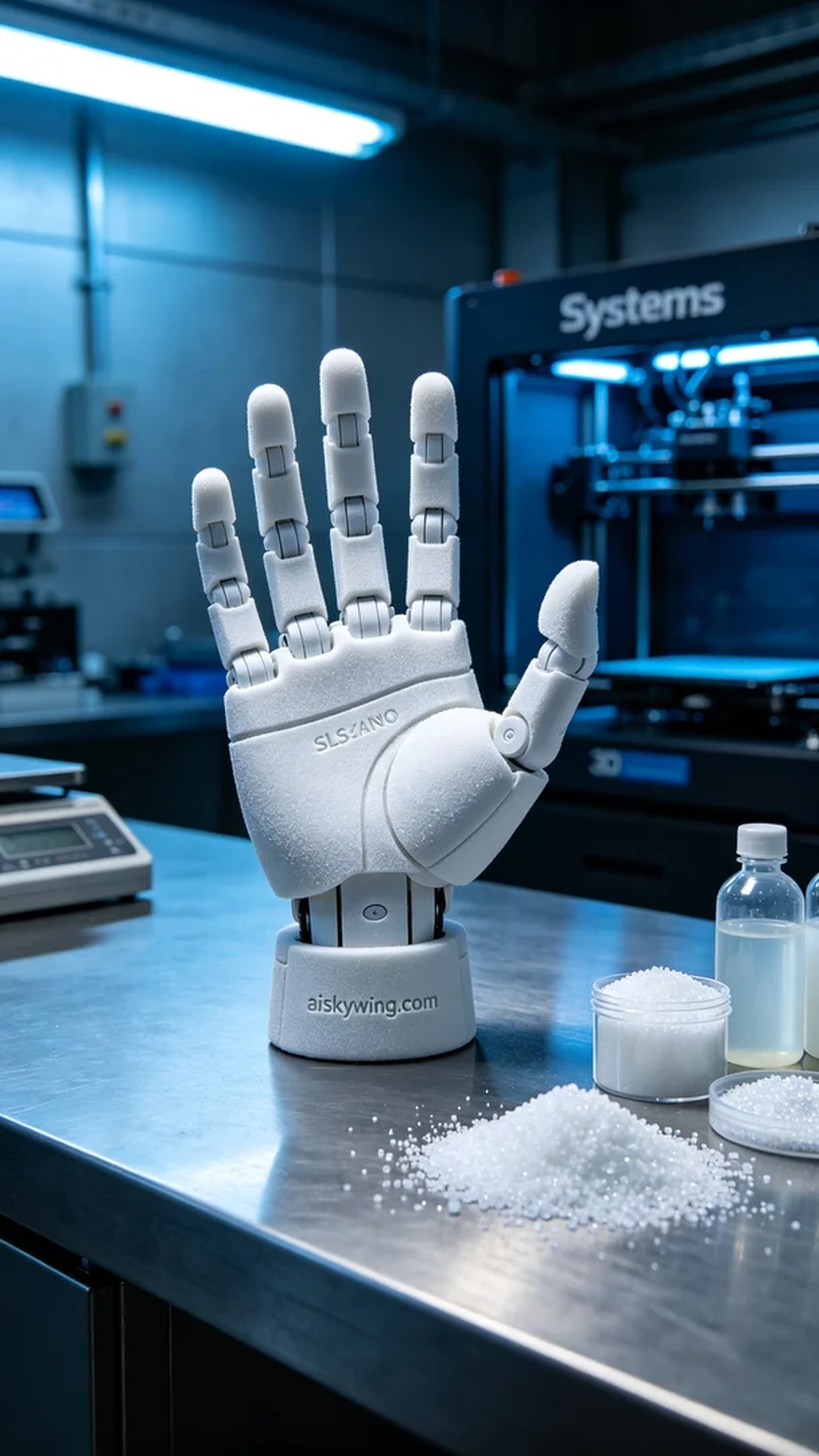
Life is a commitment to future endeavors, and recently, someone reached out on Twitter regarding the bionic robot hand skeleton. We decided to embrace this challenge.
SLS nylon is a strong yet lightweight material, ideal for creating a bionic robot hand skeleton. We chose the Systems printer for this print to ensure we maximize the material's properties. For the print parameters, we set the layer thickness at 0.1 mm, maintained a temperature of 170°C, adjusted the power to 80%, and set the speed at 40 mm per second, with an estimated total print time of about five hours.
Once the print began, the Systems printer operated smoothly as we closely monitored the progress. During printing, the powder material was sintered layer by layer using a laser, creating a robust structure. Our team regularly checked the print quality to ensure each layer fused properly and that the details met our standards, eliminating any potential defects.
After printing, we conducted the necessary post-processing steps. First, we placed the bionic robot hand skeleton in a cleaning tank and used ultrasonic cleaning equipment to thoroughly remove any powder residue from the surface. Next, we smoothed the model by sanding it to eliminate any burrs and ensure a smooth finish. After that, it was placed in a curing device, where ultraviolet light was used to enhance the strength and durability of the material before conducting a quality inspection to ensure every detail met the design requirements.
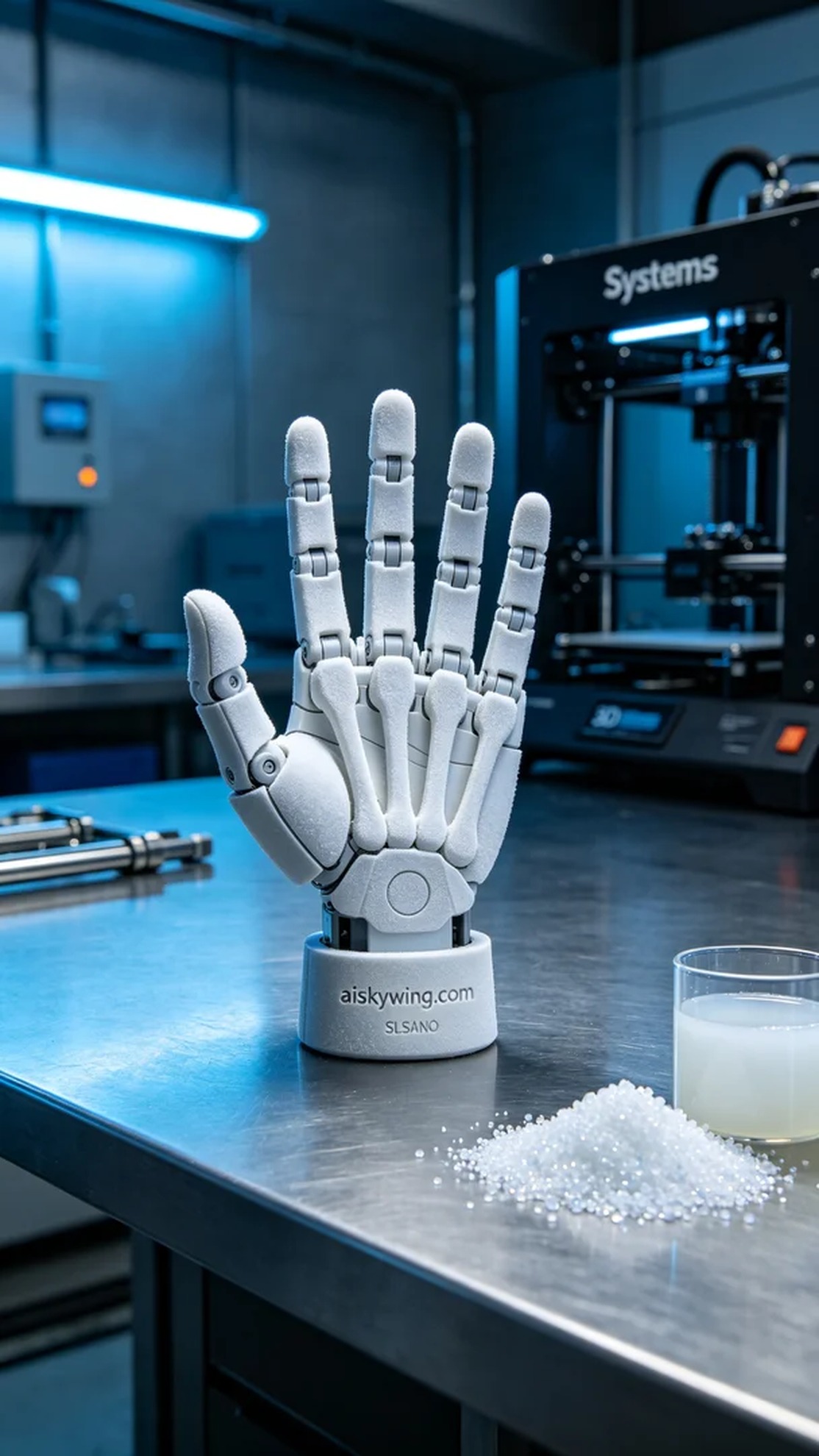
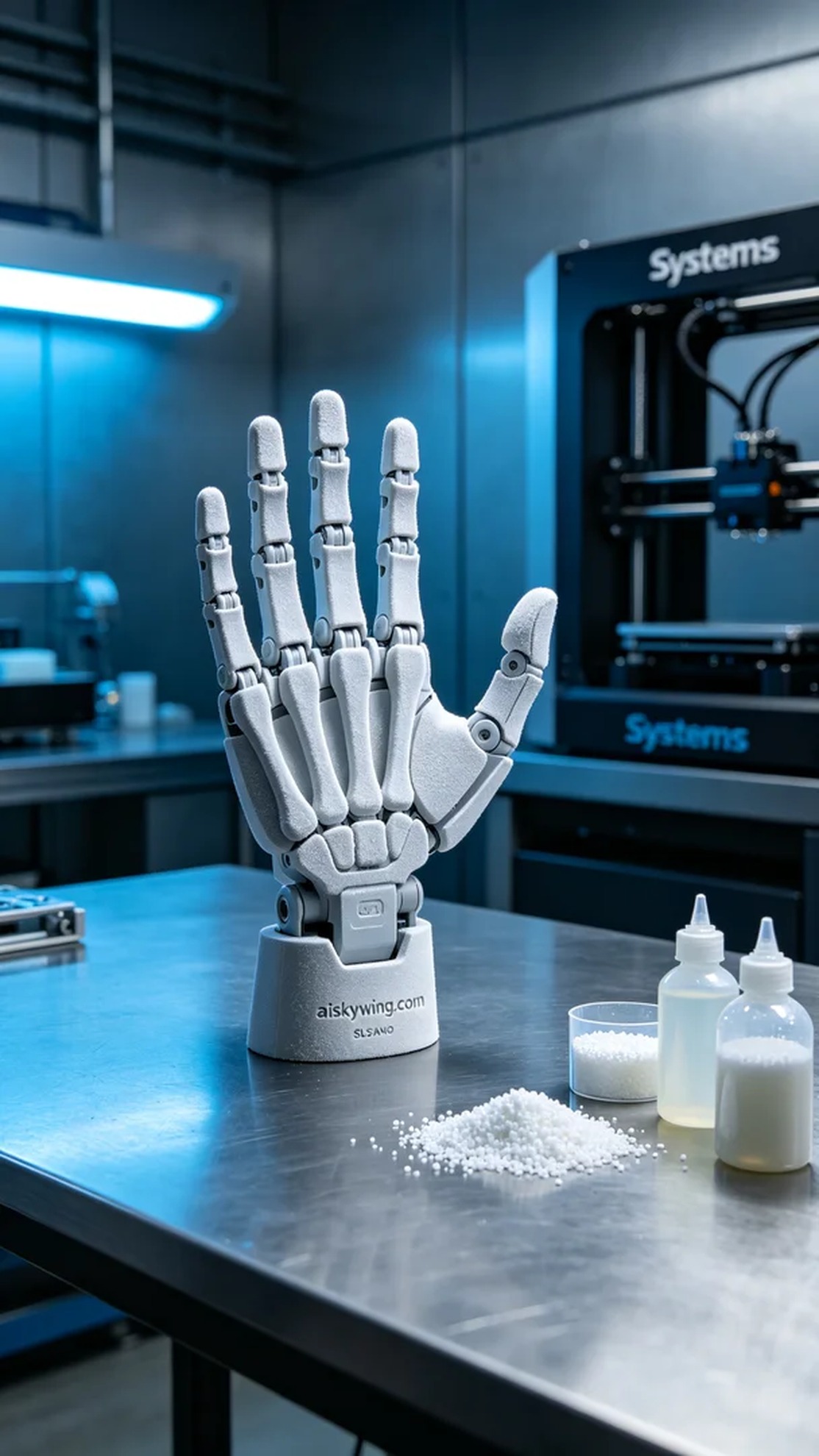
Following a series of meticulous operations, the bionic robot hand skeleton emerged, lightweight yet strong, perfectly showcasing the charm of industrial design. This printing experience reaffirmed that with dedication, every detail is worth pursuing.
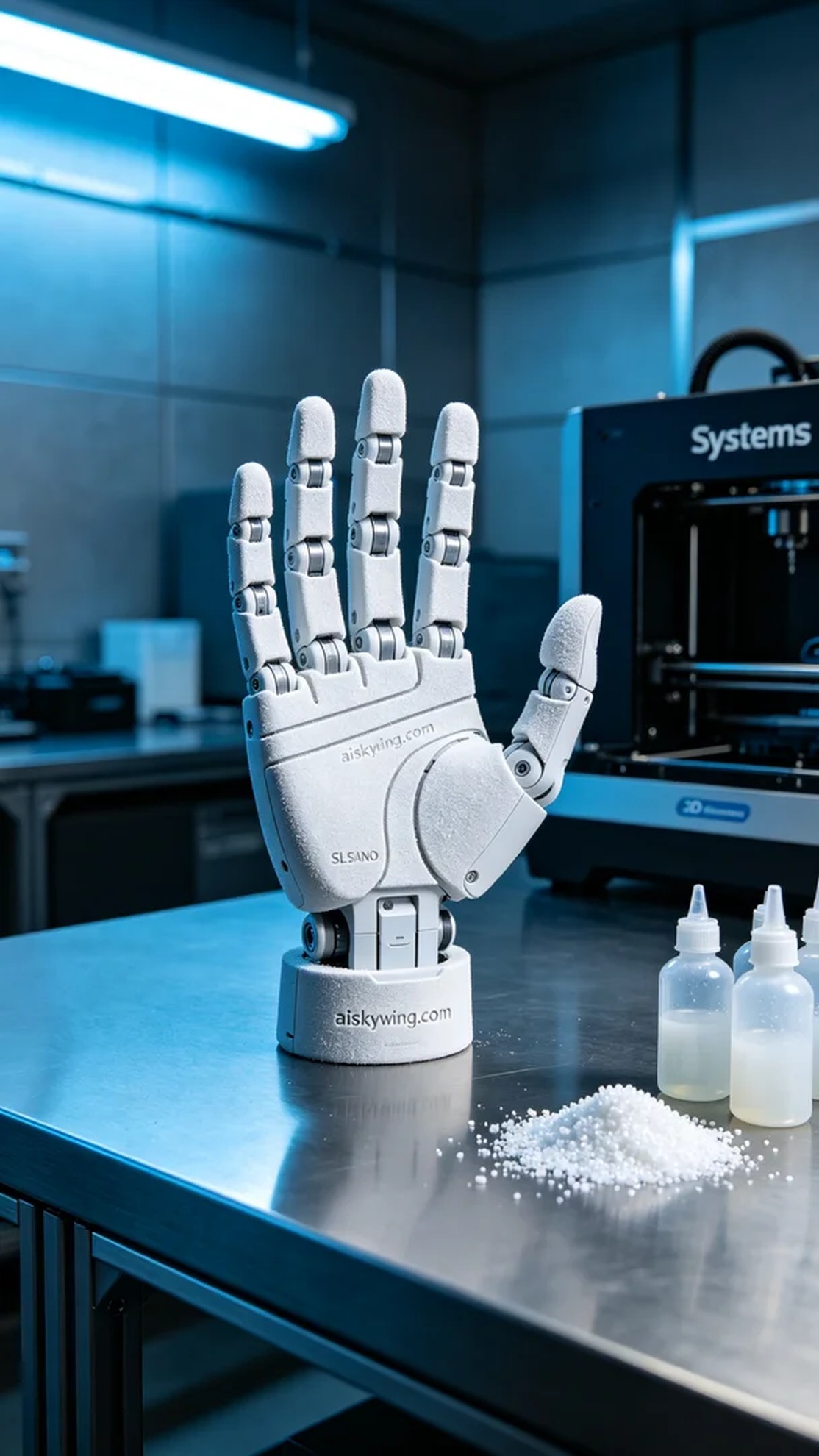
SLS尼龙是一种强韧且轻量的材料,非常适合用于制作仿生机器人手掌骨架。我们选择了Systems打印机进行此次打印,确保在材料特性上能够最大限度地发挥其优势。打印参数方面,我们设定层厚为0.1毫米,温度保持在170°C,功率出在80%,速度调整为40毫米每秒,整个打印过程预计花费约五小时。
打印启动后,Systems打印机稳定运行,我们密切监控打印进度。打印过程中,粉末材料通过激光逐层烧结,形成坚固的结构。我们的团队定期检查打印质量,以确保每一层的融合和细节都符合标准,尽量避免任何可能的缺陷。
打印完成后,我们对成品进行了必要的后处理工序。首先,将仿生机器人手掌骨架放入清洗槽,使用超声波清洗设备彻底清除表面残留的粉末。随后,我们对模型进行打磨,以消除任何可能的毛刺,确保手感光滑。接着,将其放入固化设备中,使用紫外线进行固化处理,以提高材料的强度和耐用性,最后进行质量检验,确保每个细节都符合设计要求。
经过一系列的精细操作,仿生机器人手掌骨架最终呈现在我们面前,既轻巧又坚固,完美展现了工业设计的魅力。这次的打印经历再次证明,只要用心去做,每个细节都值得我们去追求。
Aiskywing Industrial 3D Printing
Bionic robotic palm skeleton
▼

Contact Us
📞 Tel: +0086-760-85286839
📧 Email: skywing3d@163.com